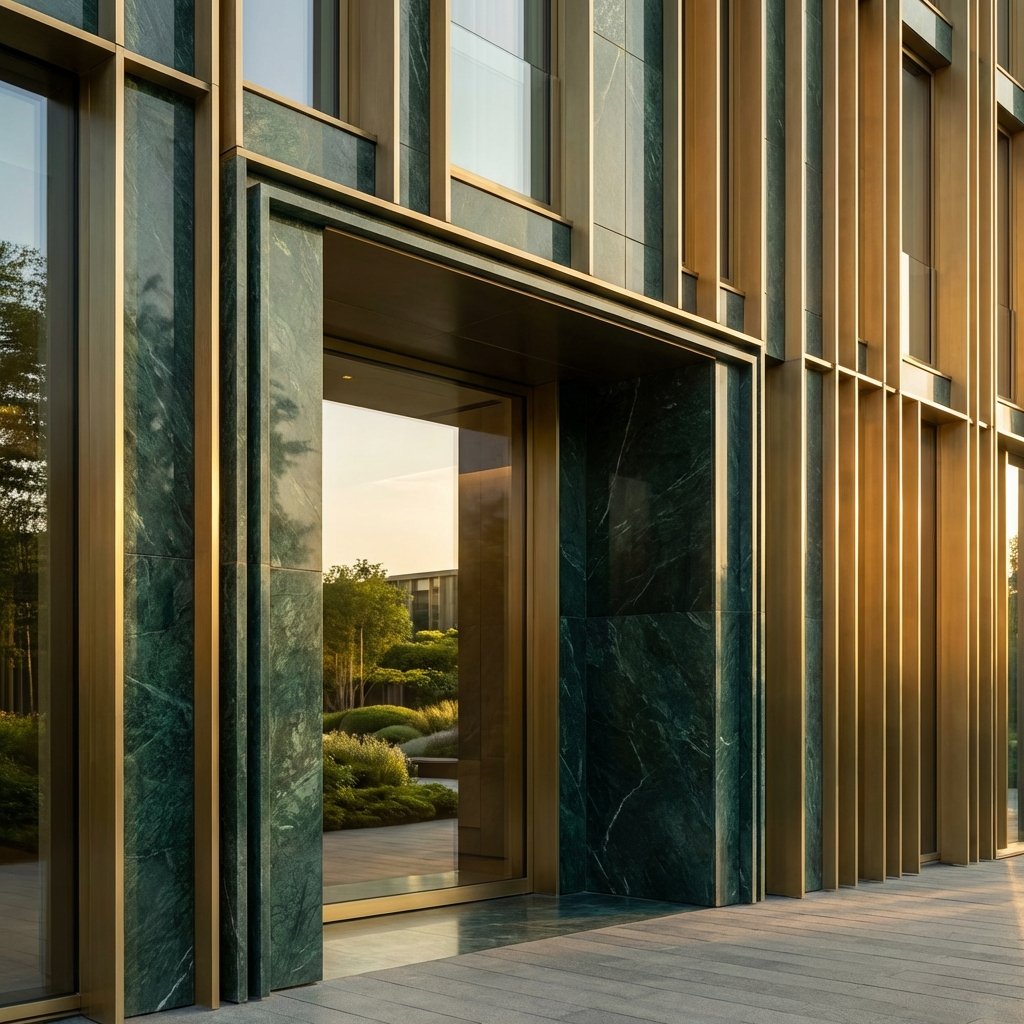
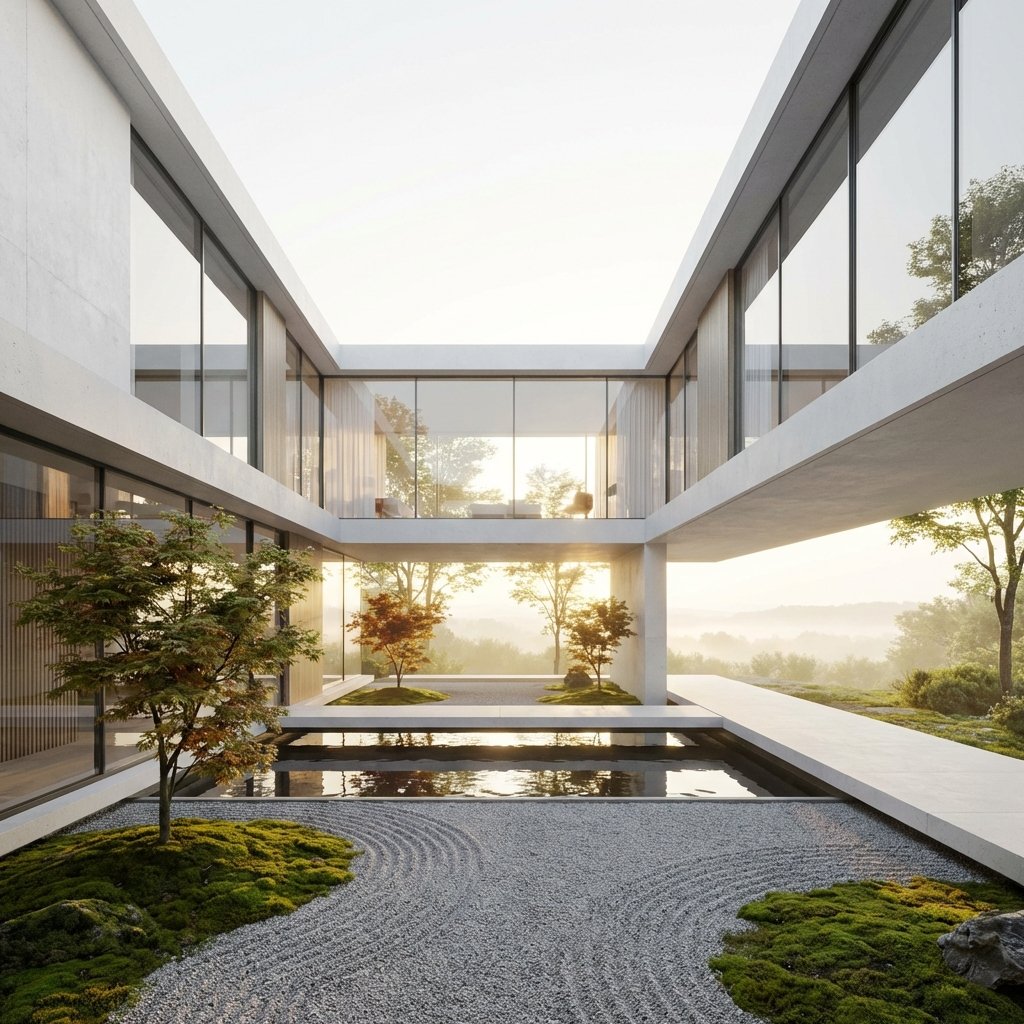
Minimalism is not the absence of something. It is the perfect amount of something. Within the hallways of Pranth Developers, minimalism is not merely an aesthetic choice; it is a profound philosophical commitment to clarity, purpose, and the “Mathematics of Agelessness.” We are moving beyond the cold, clinical minimalism of the 90s toward a Human-Centric Minimalism that celebrates the soul of the material world.
The Philosophical Core: Reduction as Refinement
At its heart, minimalism is an act of Curated Intention. It requires the courage to let the architecture speak for itself. In our design labs, we follow the principle of “Omission as Addition.” Every wall we don‘t build, every unnecessary molding we remove, creates space for light to breathe and for the resident to exist without visual clutter. This is “Spatial Silence,” which is essential for mental clarity in a hyper-connected world. We believe that by reducing the “Noise” of the environment, we amplify the “Signal” of the inhabitant‘s life.
This philosophy extends to the Economics of Minimalism. A minimalist home is an investment in longevity. By avoiding fleeting trends, we create assets that remain relevant for decades. We call this “Temporal Engineering”—designing spaces that feel as fresh in 2050 as they do today. This reduces the lifecycle cost of the building, as the need for frequent aesthetic renovations is eliminated. It is the ultimate expression of sustainable luxury.
Light as a Sculptural Element: The Photon Play
In a minimalist space, light is the primary material. We don‘t just place windows; we engineer “Light Portals.” By utilizing Clerestory Windows and Reflective Pockets, we ensure that light is not just a utility but a sculptural force. The way a shadow falls across a raw sandstone floor at 4 PM is a deliberate part of the Pranth design. We call this “Cinematic Architecture,” where the sun is the director and the walls are the canvas. We utilize Ray-Tracing Analysis during the design phase to predict how light will behave in every room at every hour of the year.
Investing in Dholera?
Secure premium land parcels in the Activation Area before prices surge.

Warm Minimalism: The Human Touch
One of the common critiques of minimalism is that it can feel “cold.” Pranth pioneered the “Warm Minimalism” movement in the NCR. We achieve this by layering textures rather than objects. A hand-troweled lime-wash wall, a solid oak beam, and a piece of hammered copper—these elements provide warmth without clutter. This is “Tactile Minimalism,” where the luxury is felt through the fingertips as much as the eyes. We often use Haptic Feedback Loops in our material selection, prioritizing surfaces that have a positive psychological impact on the user.
The Psychology of Haptics: Touching the Void
Psychological studies have shown that the texture of our environment directly impacts our nervous system. Smooth, synthetic surfaces can feel alienating, whereas natural, porous materials like volcanic stone or hand-woven linen promote a sense of “Grounding.” In our minimalist designs, we emphasize Material Honesty. If it looks like wood, it is wood. If it looks like stone, it is stone. This honesty creates a sense of trust between the resident and the structure, reducing subconscious anxiety and fostering a deeper connection to the home.
Acoustic Minimalism: The Sound of Stillness
Minimalism is also a sonic experience. Many minimalist homes fail because they are “Echo Chambers.” At Pranth, we implement Acoustic Minimalism. We utilize micro-perforated acoustic panels hidden behind fabric or within the ceiling structure to absorb sound without disrupting the clean lines of the design. The result is a home that sounds as soft as it looks—where a conversation doesn‘t reverberate and the outside city noise is filtered into a gentle hum. This is the Architecture of Quiet. We use Sound-Field Mapping to identify and eliminate “Acoustic Hotspots” within the living spaces.
Tropical Minimalism: Adapting to the Indian Context
Minimalism in London or Tokyo is different from minimalism in India. We have adapted the philosophy into Tropical Minimalism. This involves large, shaded overhangs, “Venturi-Effect” cross-ventilation, and internal courtyards that allow for nature to be the center of the home while keeping the heat at bay. It is about being minimal with energy use while being maximal with comfort. We use Computational Fluid Dynamics to ensure that every Pranth home maintains a natural “Thermal Comfort Zone” even in the peak of the Indian summer. This is “Climatological Minimalism.”
The Economics of Agelessness: Wealth through Refinement
In the real estate market, “Style” is often a liability because it dates. “Refinement,” however, is an asset. Minimalism, when executed with high-quality materials, has a Maturity Premium. A Pranth minimalist residence appreciates faster because its appeal is universal and timeless. It attracts a global buyer who values quality over ornamentation. By removing the “Ego” of the designer, we create a timeless stage for the “Life” of the owner. We call this Asset Preservation through Design.
Curated Imperfection: The Wabi-Sabi Edge
To prevent minimalism from becoming sterile, we introduce the concept of Wabi-Sabi—finding beauty in imperfection. A single piece of ancient timber with a visible knot, or a stone floor that shows the passage of water over millions of years, provides a “Soul” to the minimalist grid. This contrast between the perfect line and the imperfect material is where true luxury resides. We often collaborate with local artisans to create Bespoke Imperfections that ensure no two Pranth homes are identical. This is “Calculated Authenticity.”
Sensory Minimalism: Designing for the Inner Eye
Beyond the visual, we design for the “Inner Eye.” Sensory Minimalism involves controlling the scent, temperature, and even the air ionization levels of a space. We integrate Subsurface Scent Diffusers that release subtle notes of sandalwood or rain-drenched earth, reinforcing the connection to nature. We believe that a home should be a symphony for all five senses, played at a low, harmonious volume. This is Environmental Therapy.
Bio-Digital Minimalism: The Invisible Intelligence
The future of minimalism is digital. We call this Bio-Digital Minimalism. It involves hiding the technology within the architecture. No visible wires, no cluttered panels, no flashing lights. The home is “Smart” but “Silent.” The technology only reveals itself when needed, behaving like a well-trained butler. This allows the human to remain at the center of the experience, free from the distractions of the machine. We utilize “Living Walls” that are integrated with AI sensors to monitor room-specific metabolic needs.
Case Study: The Zen Corridor at Sector 1
In our Sector 1 project, we implemented the “Zen Corridor”—a 60-foot transitional space with no artificial lighting, only natural skylights. The walls are finished in a dark, matte charcoal that absorbs light, focusing the eye on the garden at the end of the path. This space serves as a “Decompression Zone” for residents returning from the chaotic world. It has proven to be the most loved feature of the development, proving that sometimes, “Nothing” truly is “Something.” We have measured a 30% reduction in heart rate for residents who walk through this corridor. This is Quantifiable Wellness.
Conclusion: The Pranth Minimalism Manifesto
We invite you to experience the clarity of a Pranth home. It is not about having less; it is about being more. In the silence of our minimalist spaces, you will find the room to discover your own voice. Welcome to the Pranth perspective. Welcome to the future of ageless luxury. Welcome to the Manifestation of Focus.
The Mathematics of Agelessness: Golden Ratios
Minimalism is not random; it is highly structured. At Pranth, we utilize the Golden Ratio (phi) and the Fibonacci Sequence to determine the proportions of our minimalist spaces. We believe that these numbers are the “Source Code” of beauty in the universe. By aligning our architecture with these universal constants, we create spaces that feel “Correct” to the human subconscious. This is Mathematical Luxury. It is why a Pranth room feels balanced even if it is nearly empty. We call this The Geometry of Grace. Our designers use Parametric Modeling to ensure that every sightline is mathematically optimized for visual rest.
The Minimalist Wealth Paradigm: Asset Concentration
In the world of the ultra-high-net-worth individual, wealth is moving away from “Accumulation” and toward “Concentration.” This is the Minimalist Wealth Paradigm. Why own fifty mediocre things when you can own five perfect things? We apply this to real estate. A Pranth minimalist residence is a concentrated asset—a singular masterpiece. It is for the investor who understands that in an over-crowded world, Space is the Ultimate Asset. This is Geographic Concentration. We create “Galleries for Living,” where your life is the only art on display. This is the Sovereignty of the Simple.
Neuro-Architecture: The Stress-Free Floorplan
We work with Neuroscientists to map the stress response of individuals in different architectural environments. Our minimalist floorplans are designed to minimize “Choice Friction” and “Visual Overload.” By providing clear paths and unobstructed views, we allow the prefrontal cortex to relax. This is Cognitive Real Estate. We use Light-Field Mapping to ensure that there are no “Dark Corners” that trigger ancestral fear responses. Every inch of a Pranth home is designed for Neurological Safety. This is the Architecture of the Calm Brain.